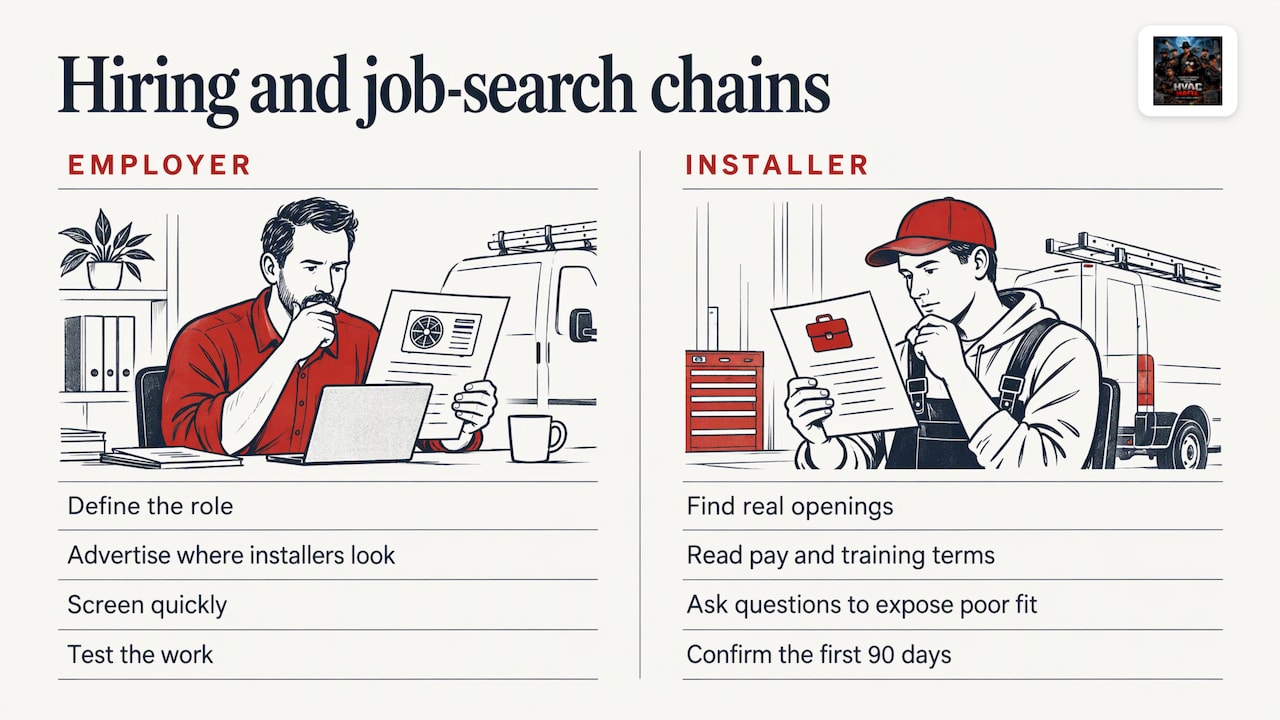

If you want a service technician job in HVAC, skip the giant general boards where an HVAC opening sits next to a rotating-equipment job and a copier repair gig. Look where HVAC contractors post to HVAC techs. At HVAC Mafia, registering as a member is free. Openings are hidden from non-members, and applications go straight to the employer’s own hiring system. This guide covers what the listings ask for, what they pay, and how to read one before you apply.
TL;DR
- “Service technician” is a broad label. HVAC service listings mean troubleshooting and repairing heating, cooling and refrigeration equipment, and that’s different from general field-service work.
- Most HVAC postings expect trade school or equivalent training and EPA refrigerant certification. Experience requirements climb with the level of the role.
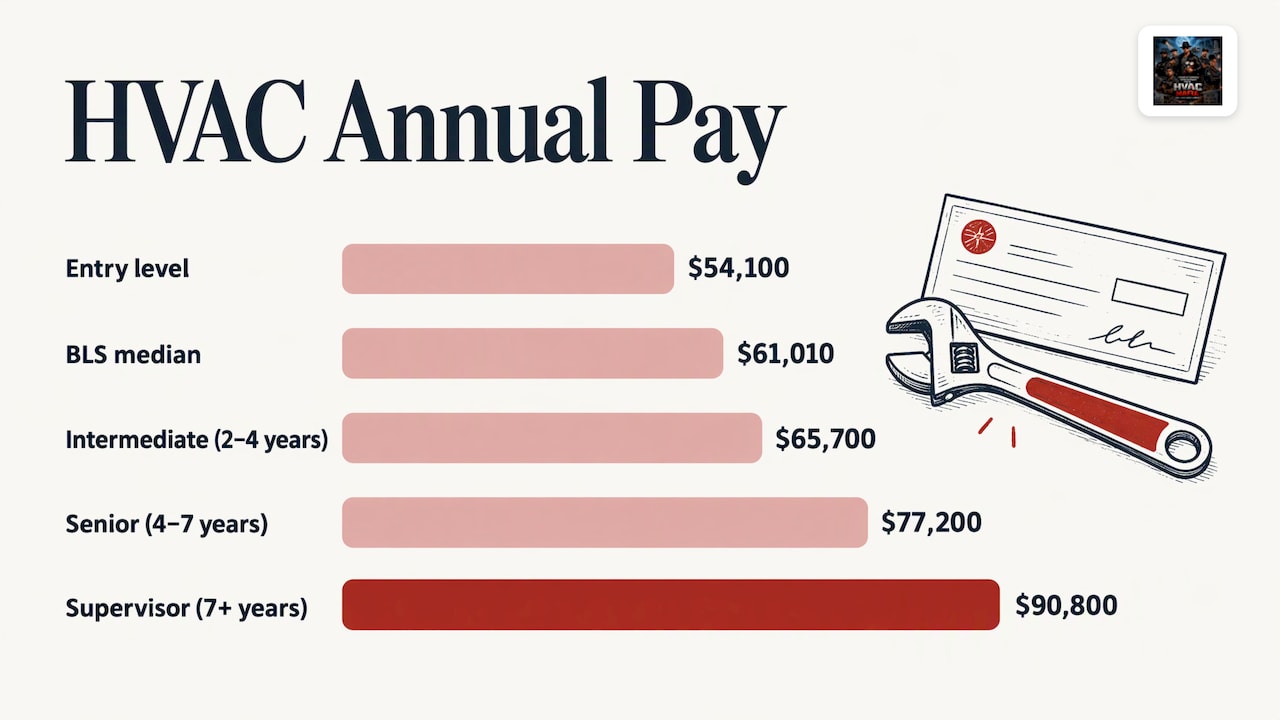
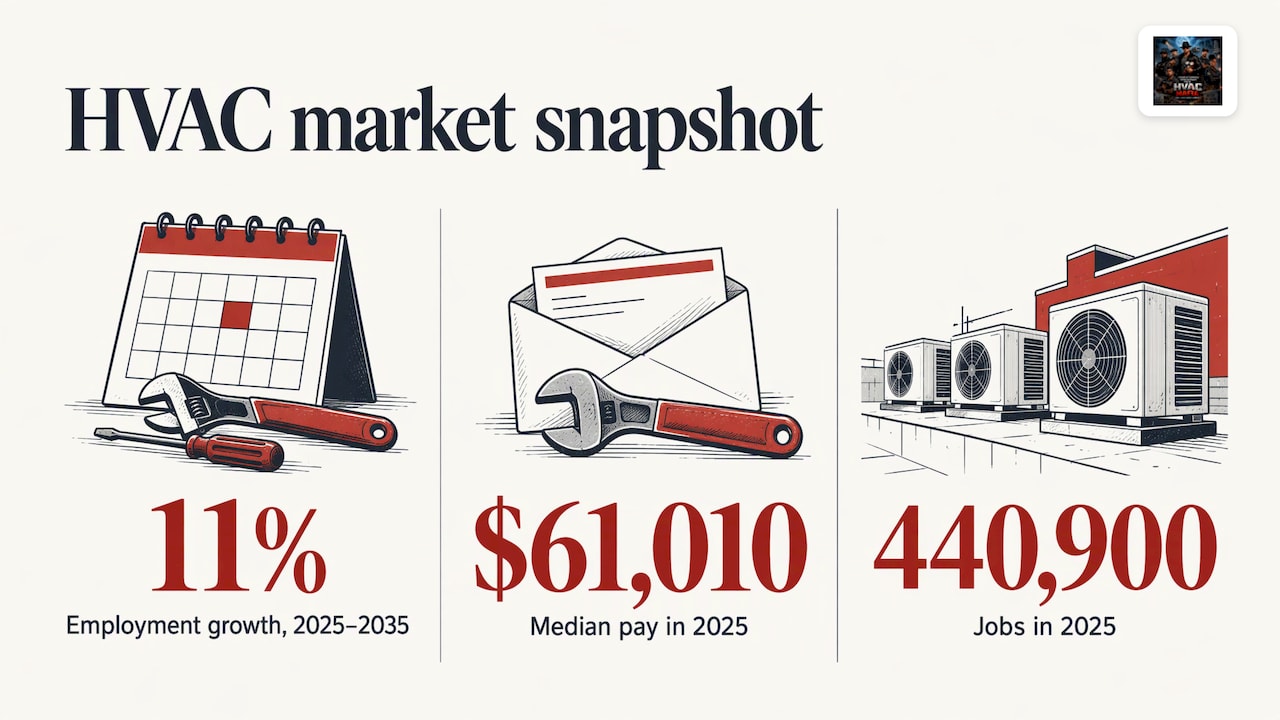
- BLS puts the May 2025 median pay for HVAC mechanics and installers at $61,010 a year. Compare whole packages, not just the hourly number.
- Read every listing for pay, on-call load, truck and tools, training and who you’ll report to.
- Registering with us is free for technicians, apprentices and students.
Table of Contents
- What “service technician” means in HVAC
- What listings usually ask for
- What the pay looks like
- How to read a listing before you apply
- Where to find HVAC service tech jobs near you
- Preparing to apply
- For contractors: why listings get ignored
- Perspective
- Your next step
- FAQ
- Sources
What “service technician” means in HVAC
Search the phrase and you’ll get a mix. Plenty of results are field-service jobs for printers, medical devices, generators or industrial pumps. Those can be good careers, but they aren’t the same trade.
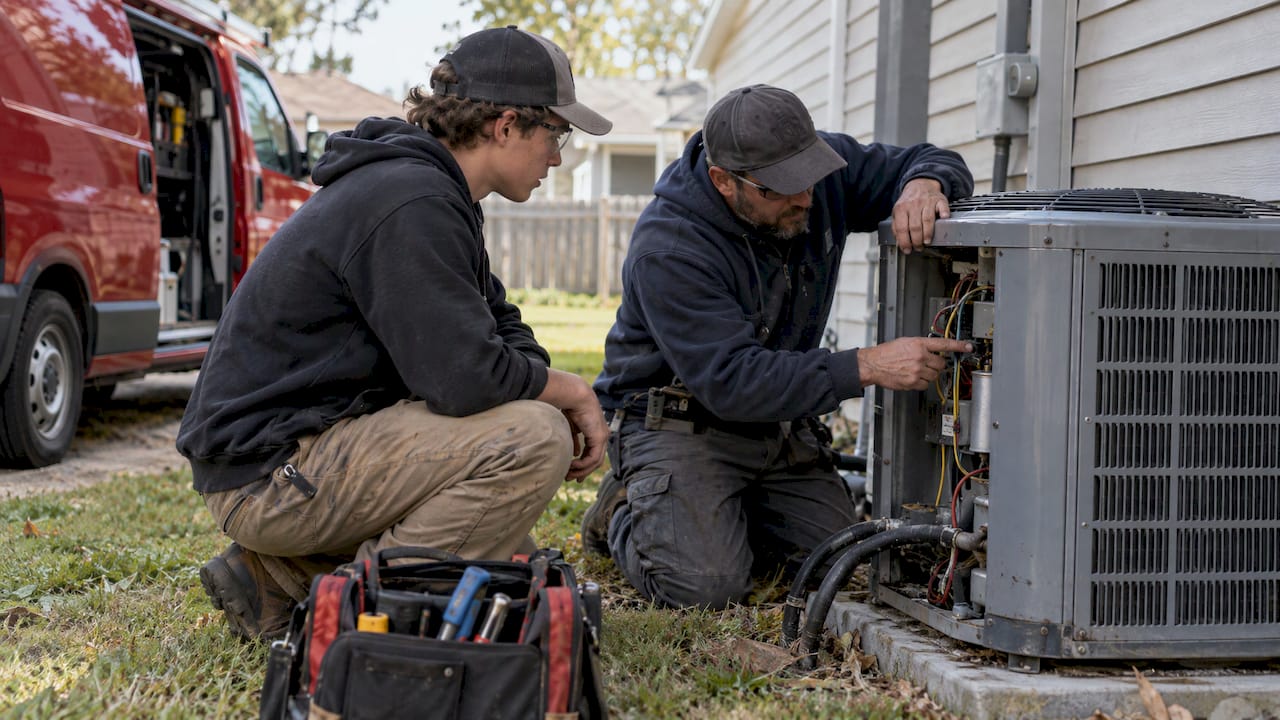
In HVAC, a service tech goes to a customer’s home or building, figures out why a system isn’t heating, cooling or holding temperature, and fixes it. O*NET lists sample titles for this occupation such as AC Mechanic, AC Tech, HVAC Control Tech, HVAC Installer and HVAC Mechanic. So you’ll see the same job under several names.
The work splits roughly three ways:
- Residential service. Furnaces, split systems, heat pumps, thermostats. Lots of customer contact, usually one tech per truck.
- Commercial service. The HVAC Career Map describes commercial service techs as generalists who troubleshoot and repair rooftop units, pumps, valves, walk-in coolers and thermostats, often working with building managers and engineers.
- Refrigeration. Walk-ins, reach-ins, rack systems. It overlaps with commercial and often pays for the specialty.
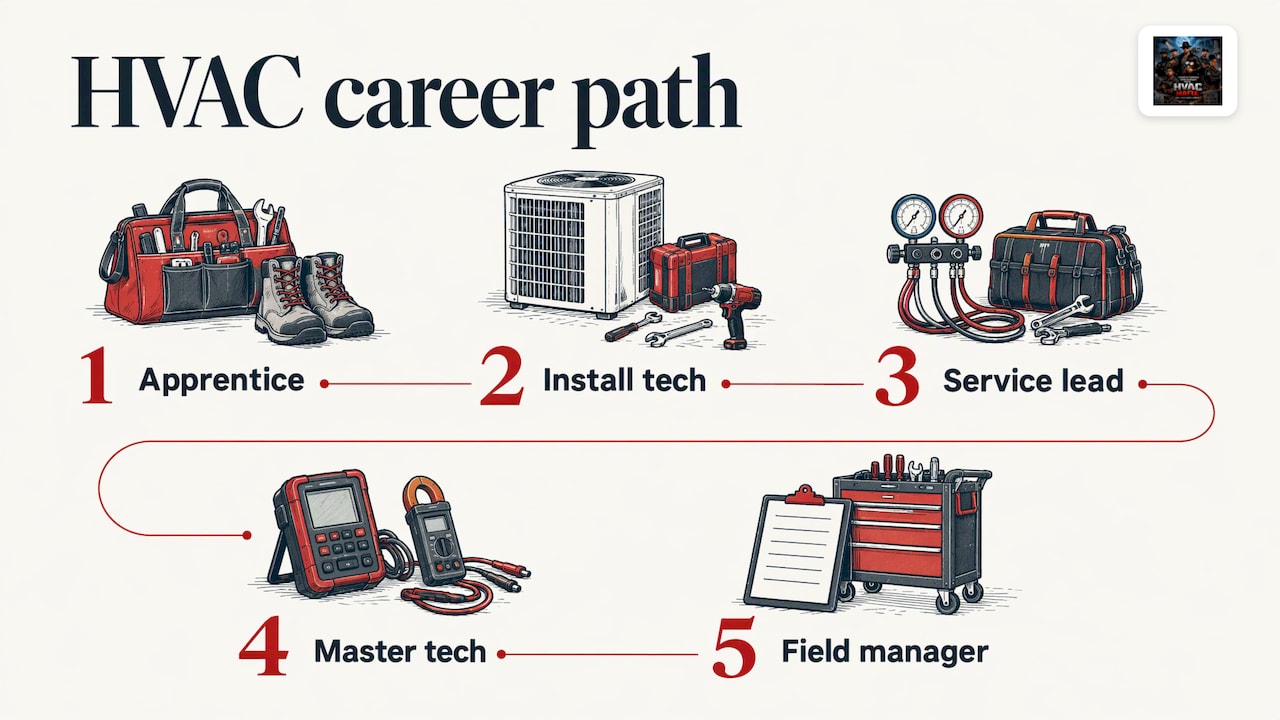
Install jobs are a separate track, though some shops move techs between install and service. If you want the long view on titles, pay and where each path leads, our HVAC service technician career guide lays it out.
What listings usually ask for
Requirements are the part of a listing people skim and then regret skipping. Here is what the evidence says is typical.
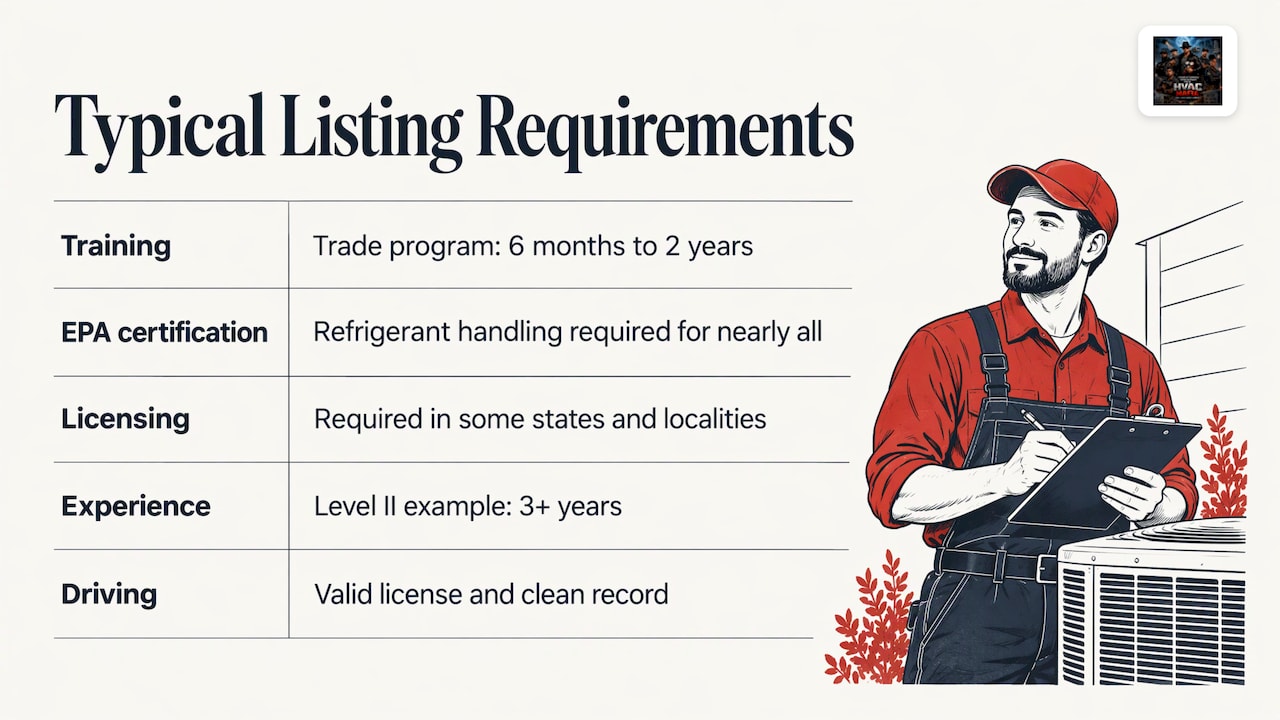
Training. BLS says HVAC technicians typically need a postsecondary nondegree award from a trade school or community college, with programs running from 6 months to 2 years. Many shops also take people through on-the-job training, so an entry-level or apprentice listing may ask for far less.
EPA certification. The same BLS page says certification in refrigerant handling is required for nearly all technicians. If you don’t have it yet, a listing that says “EPA 608 preferred” is often a signal the shop will work with you, but read the wording.
Licensing. BLS notes some states and localities require a license. Rules vary by state, so check your state’s licensing board before you assume a listing in another state fits you.
Experience. This scales with the title. As one example, a Daikin Applied HVAC Service Technician II posting from October 2026 in Atlanta asked for 3+ years of related experience, a high school diploma or GED, and a technical school HVAC certificate or equivalent. Duties covered rooftop units, chillers and boilers, plus mentoring Level I technicians. That pattern is common: Level I for people starting out, Level II once you can run calls alone, lead roles for those who can mentor.
A clean driving record and a valid driver’s license show up in almost every service listing, because you’ll be in a company vehicle.
What the pay looks like
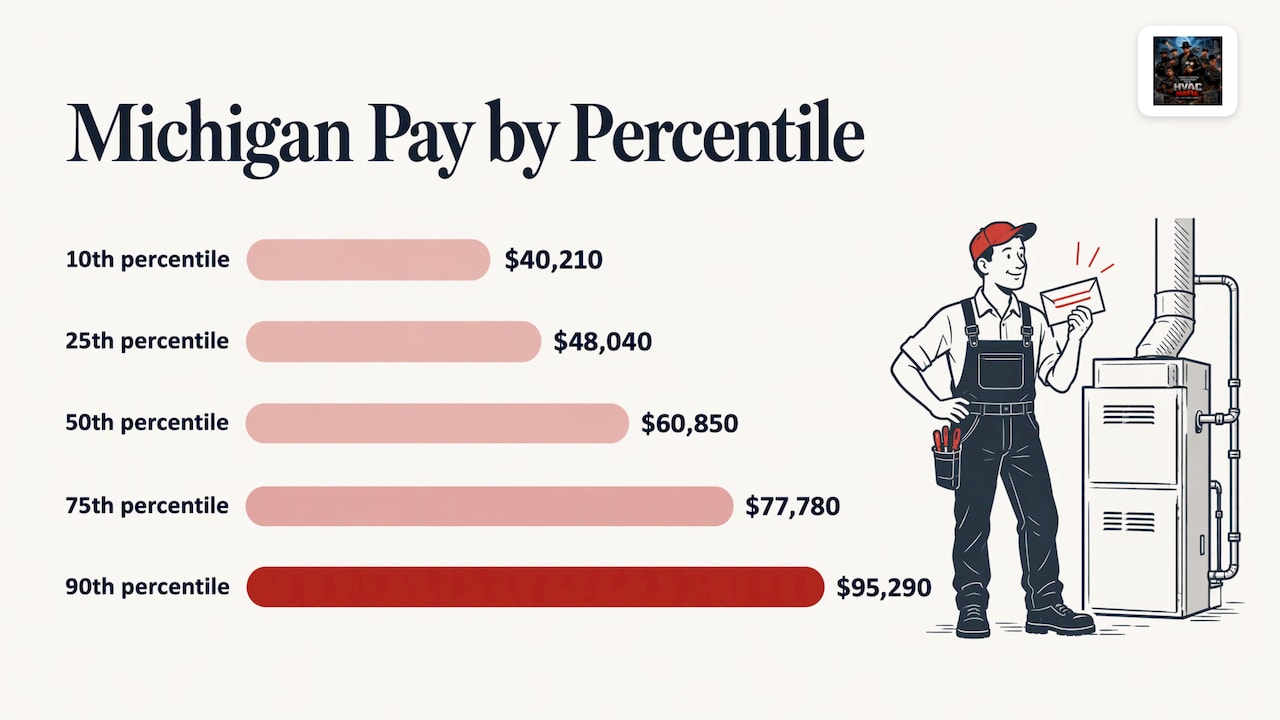
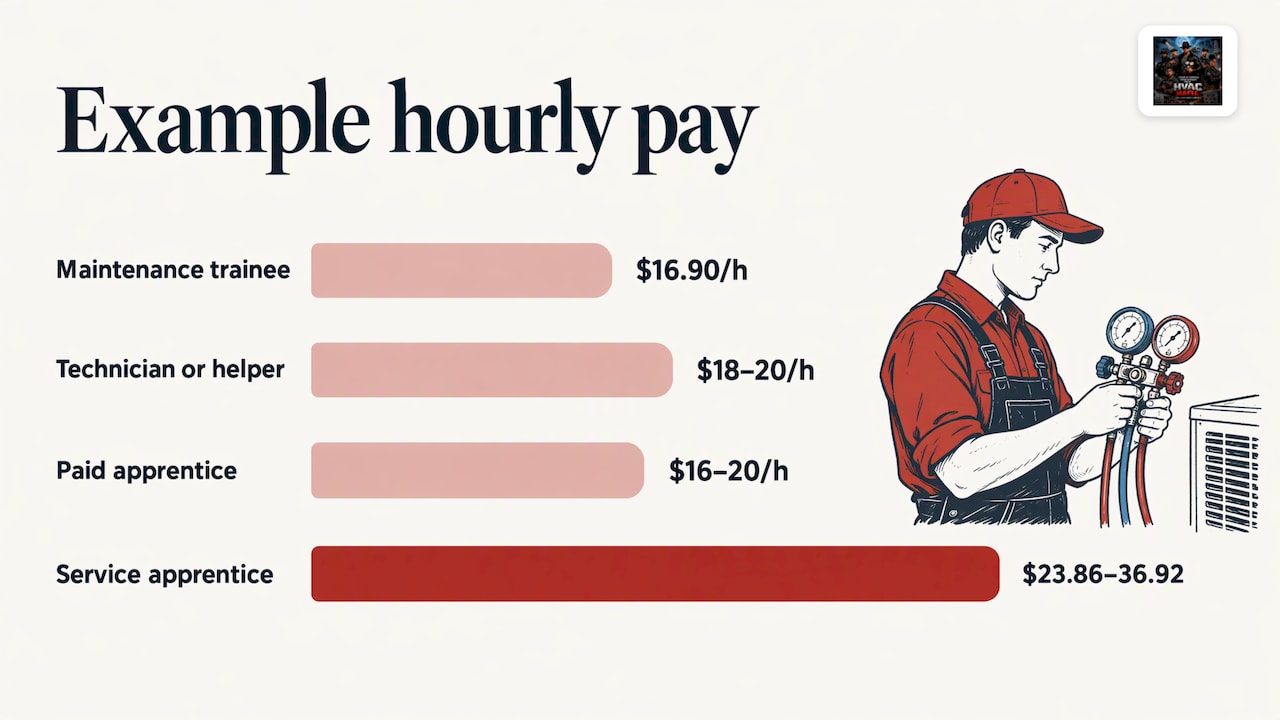
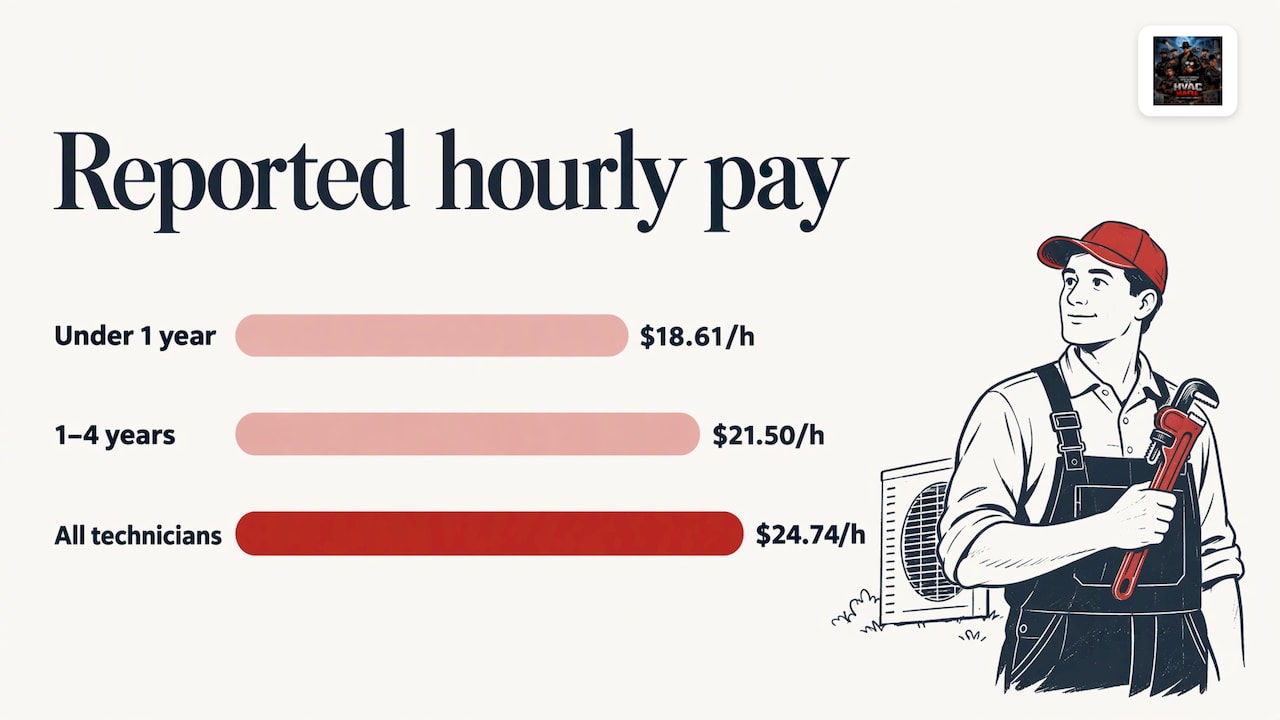
BLS reports that the median annual wage for HVAC mechanics and installers was $61,010 in May 2025, or $29.33 an hour. The lowest 10% earned under $40,050 and the highest 10% over $95,210. BLS updates these numbers annually, so check the live page for the latest release.
That spread tells you something. Experience, certifications, market and specialty move you around the range. Two things to remember when you compare a listing against BLS:
- BLS figures don’t include everything a service tech might earn on top, such as overtime, shift differentials, commission or spiff programs.
- Many service techs work evenings, weekends and on-call rotations, according to BLS. A higher base can come with a heavier rotation.
Want to see how this plays out in one state? Our HVAC salary in Texas breakdown shows what techs there really make.
One thing we’d push on: pick listings that state pay. A range in the posting means the contractor has thought about what the job is worth. When a shop won’t put a number anywhere, you spend your first phone call finding out whether it’s even in your range.
How to read a listing before you apply
Treat each listing like a diagnostic. You’re looking for symptoms of a shop you’ll want to stay at.
Check the total package
Pay is the headline. The rest decides whether you keep the job:
- Health insurance: what share of the premium does the company cover, and does it cover family?
- Retirement: is there a match, and when does it vest?
- Paid time off: how many days, and when do they start accruing?
- Truck: take-home or not, fuel and maintenance covered?
- Tools: allowance, company-supplied, or all on you?
- Training: paid classes, manufacturer schools, help with certifications?
Look at the call mix and the load
Is it mostly maintenance agreements, or break-fix emergencies? Is on-call a rotation or “whoever’s closest”? How many calls a day do they expect? A listing that describes the work in specifics usually comes from a shop that knows its own operation.
Find the path
Does the listing mention Level I, II, III, lead tech, or service manager? Do they say who you’d mentor or learn from? If you’re an apprentice or a trade school student, this matters more than the starting wage. You want a place that teaches, not one that needs a warm body on a truck.

Notice the tone
Listings written in plain trade language, with real details on schedule and equipment, tend to come from people who work in the trade. Vague buzzwords and “rockstar” language don’t tell you anything about the day-to-day.
Where to find HVAC service tech jobs near you
There are a few types of places to look, and each has a different purpose.
- Trade-only job boards. Listings come from HVAC contractors, and the audience is techs. This is where we sit. At HVAC Mafia, openings are visible to registered members, and membership is free for techs.
- General job sites. These return a large number of results, but you’ll sort through unrelated fields and estimated pay figures that aren’t from the employer.
- Manufacturer and large-company career pages. Good for big commercial and applied-equipment roles with structured levels.
- Word of mouth. Supply house counters, trade school instructors and techs you’ve worked beside know who’s hiring.
To see what real postings look like, here are a few on our board:
- HVAC service technician in Reno, NV, a listing that states a wide pay range.
- HVAC service technician in Spring, TX
- HVAC service technician in Loveland, CO
- HVAC service technician in Jupiter, FL
- HVAC service technician in Bluffton, SC
- HVAC service technician in Claxton, GA
- If you lean toward install, an HVAC install lead technician role in Sharonville, OH
More openings are inside the member area, since they’re hidden from non-members.
Preparing to apply
A short checklist, in order:
- Update your certifications. List your EPA certification type, any state license, NATE or manufacturer training, and your driver’s license status.
- Write your experience in equipment and calls. “Ran 8 to 10 residential service calls a day, split systems and gas furnaces” tells a service manager more than “experienced HVAC tech.”
- Decide your floor. Know the pay, schedule and on-call terms you’d accept before you talk to anyone.
- Prepare questions. Ask about the call mix, the truck, the training path and how the shop handles slow seasons.
- Apply directly. On our board, your application goes straight to the employer’s own hiring system, so you’re talking to the shop and not to a middleman.
If you’re an apprentice or still in trade school, say so up front and ask what the first 90 days look like. Good shops have an answer.
For contractors: why listings get ignored
If you’re a contractor or service manager reading this, the techs reading your posting are doing the same checklist. A posting that skips pay, hides the on-call load or sounds like every other ad loses to one that doesn’t.
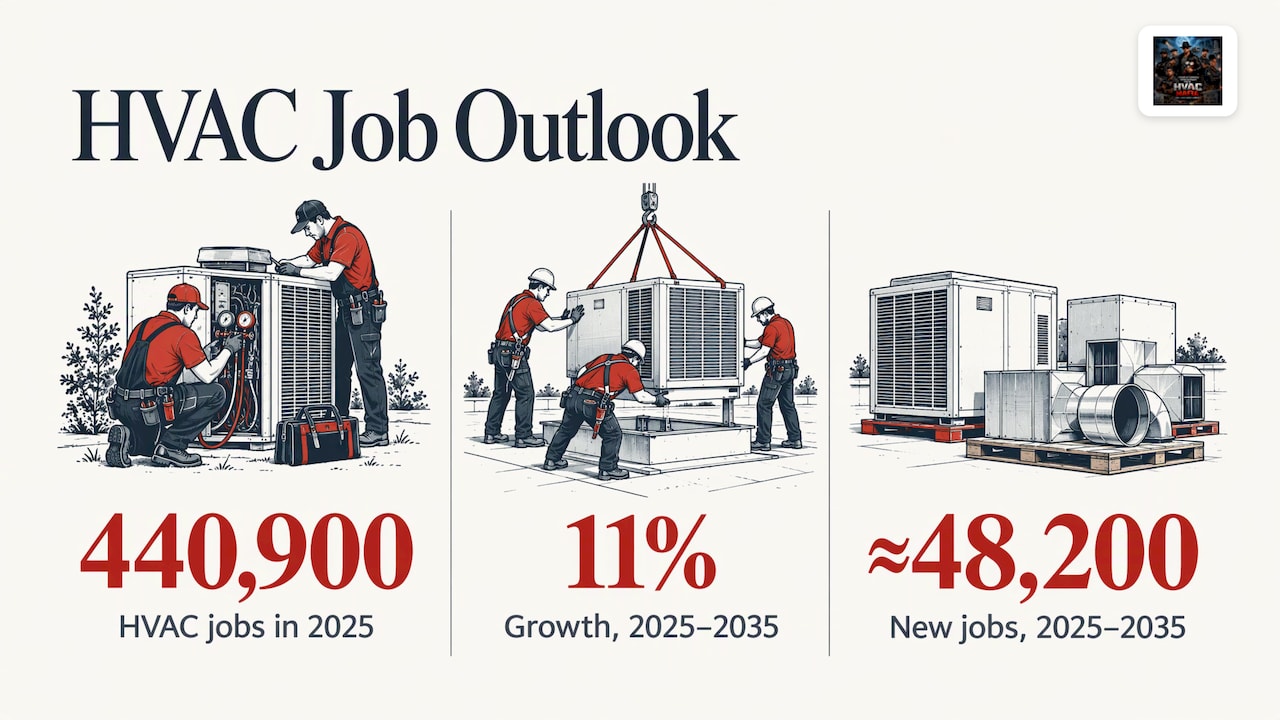
The demand side is real. BLS counts 440,900 HVAC mechanic and installer jobs in 2025 and projects 11% growth from 2025 to 2035, about 48,200 net new jobs, with roughly 40,600 openings a year, many from people retiring or leaving the occupation. Techs have choices.
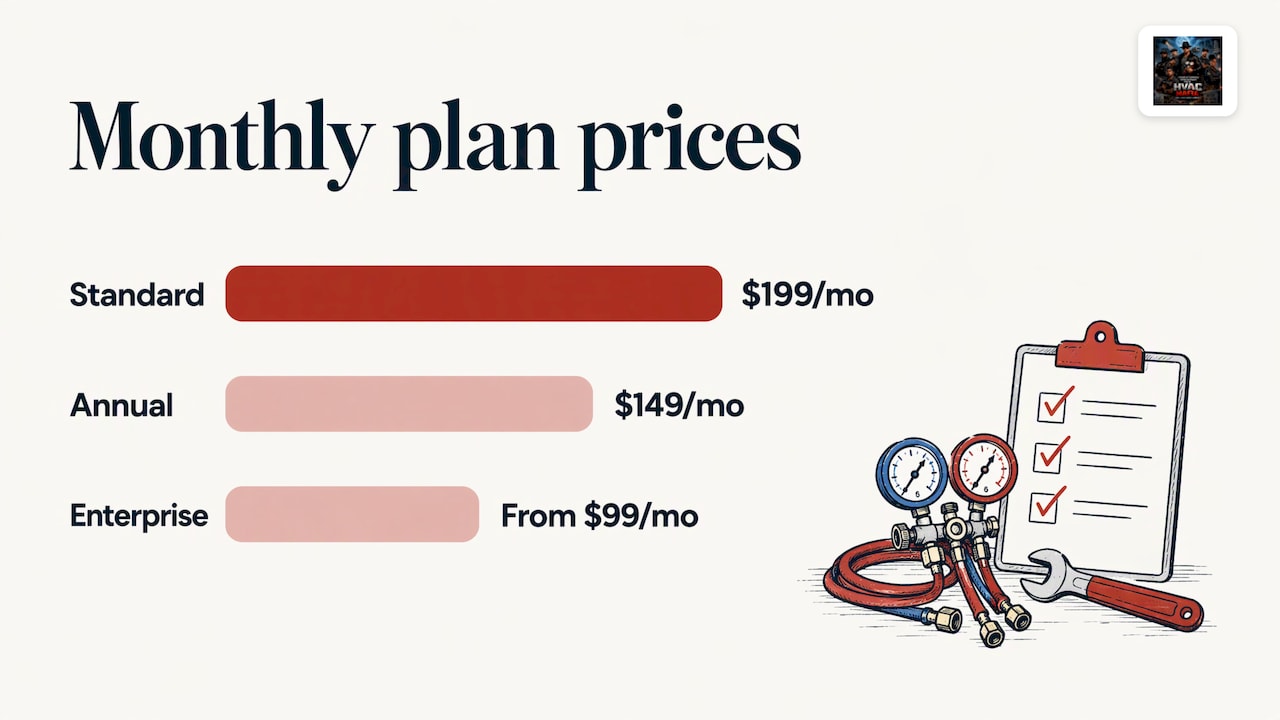
Our board puts your opening in front of a trade-only audience of nearly 100,000 HVAC followers. Posting plans are published on our job posting plans page:
| Plan | Price |
|---|---|
| Standard | $199 per month per position |
| Annual | $149 per month per position |
| Enterprise | from $99 per month per position |
If you want your shop to stand out beyond a single listing, a Company Spotlight profile shows your culture, pay and benefits. It’s $149 per month on the monthly plan or $1,699 per year on the annual plan. Spotlight placement for a single position is also available, from $149 per week per position to $349 per month per position for ongoing; see the Spotlight pricing page for the full list.
Perspective
Here’s what a long time in this trade teaches you: a job is not just a paycheck, it’s the people you ride with, the training you get and the shop’s respect for you.
That’s why we built HVAC Mafia as a place for the trade. Listings and discussion are limited to verified HVAC trade professionals, so contractors reach skilled technicians without homeowner or outsider noise. Techs get straight talk on pay, certifications, career paths and how to spot a good employer, from other techs and not from corporate messaging.
If you’re a tech, register, look at what’s open and ask the shop the hard questions. If you’re a contractor, put your pay, your culture and your benefits in the listing. The best techs read it. Build a career, not just another paycheck.
the author
Your next step
Technicians, apprentices and trade school students never pay to use HVAC Mafia. Join as a member to see openings from real contractors, read the Tech Talk forums and listen to the HVAC Underground Podcast. Contractors can start on the posting plans page.
FAQ
Do I need a degree to get an HVAC service technician job?
No four-year degree is needed. BLS says the typical entry path is a postsecondary nondegree award from a trade school or community college, and programs run from 6 months to 2 years. Some shops also hire entry-level people and train them on the job.
Do I need EPA certification?
For nearly all technicians, yes. BLS says EPA certification in refrigerant handling is required for nearly all HVAC technicians. Some states and localities also require a license, so check with your state’s licensing board.
What does an HVAC service technician make?
BLS reports a May 2025 median of $61,010 a year, or $29.33 an hour. The lowest 10% earned under $40,050 and the highest 10% over $95,210. Overtime, on-call pay and shift differentials aren’t in those figures, so compare the full package in each listing.
Is a service technician the same as a field service technician?
Not quite. “Field service technician” covers many industries, from medical equipment to industrial machinery. An HVAC service technician diagnoses and repairs heating, cooling and refrigeration systems, and the listing should name the equipment.
How do I find openings near me?
Register with a trade-only board, then filter by your area. Listings on ours are visible to members, who sign up for free, and applications go to the employer’s own hiring system.
Sources
- O*NET OnLine: 49-9021.00 Heating, Air Conditioning, and Refrigeration Mechanics and Installers
- Commercial Service Technician, HVAC Career Map
- BLS Occupational Outlook Handbook: Heating, Air Conditioning, and Refrigeration Mechanics and Installers
- HVAC Service Technician II, Daikin Applied