HVAC Mafia

Private Equity Is Buying the Trade. You Are Not For Sale

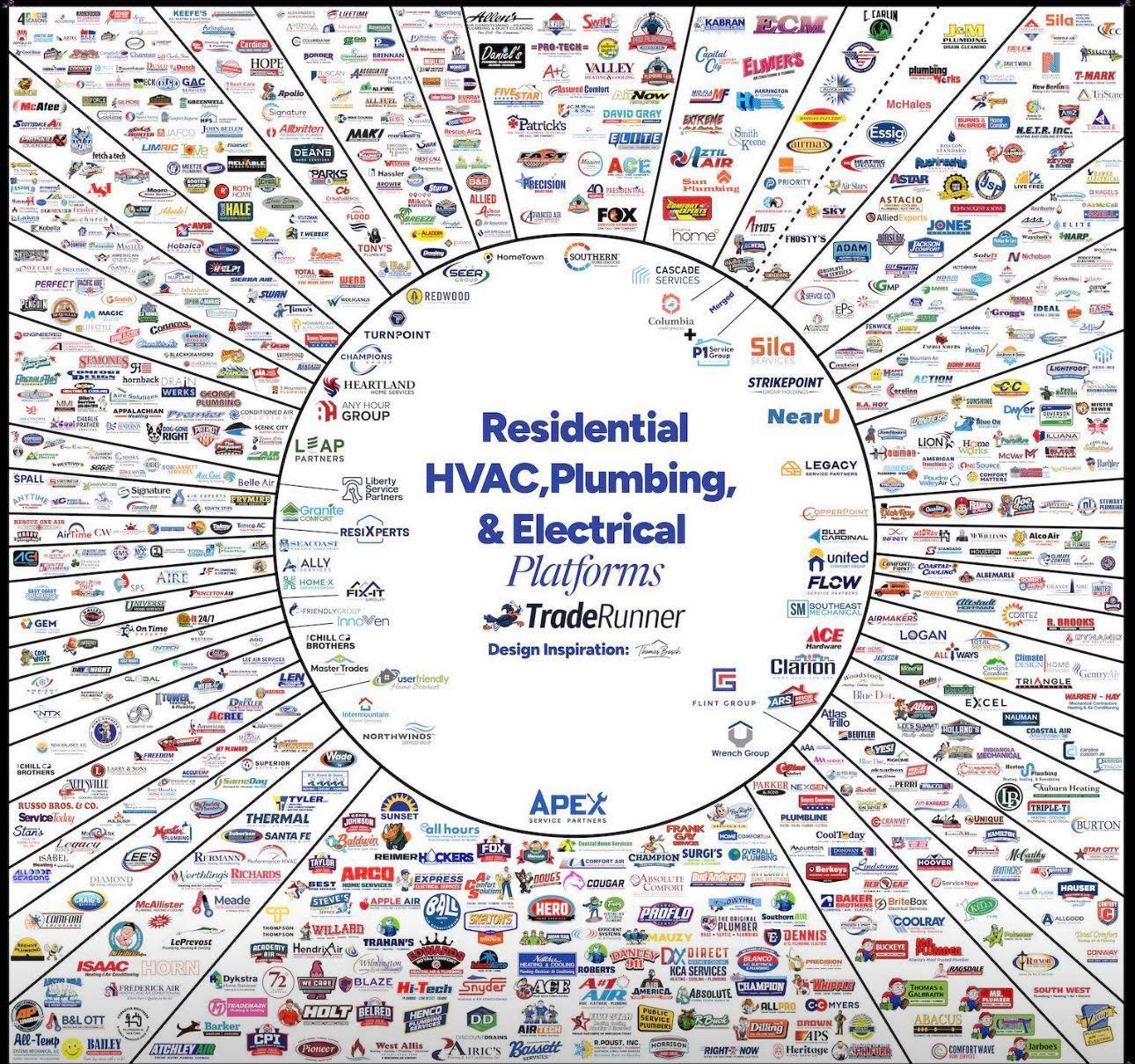
The family shop down the street might not be a family shop anymore. It might be a portfolio company — same trucks, same logo, same guys you grab a beer with — quietly owned by a fund in a glass tower that has never once felt an attic in August. This is your heads-up from the Family. The suits found us. Here’s what it means for the man and woman holding the gauges.

You’ve heard the rumors. The shop two towns over got “investment.” Your buddy’s company suddenly has a new dispatch app, a new pay plan, and a regional manager nobody’s ever met. A competitor you used to bid against turns out to share an owner with three other “competitors” in the same county. None of that is a coincidence. That’s the roll-up, and it’s already on your block.

This one isn’t about refrigerant or tools. It’s about who signs your check, what they expect from you, and how much leverage you actually have — which is more than they want you to know.

First — What’s Actually Happening

Private equity figured out something the trade always knew: people will always need air conditioning, the work can’t be offshored, and the maintenance revenue comes back every single year like clockwork. To a fund, that’s not a trade. That’s a “recession-proof, recurring-revenue platform.” So they started buying.

The pace is not subtle. PE made up about 8% of HVAC deals in 2023. One year later it was 23%. Add-on acquisitions — the funds buying up small shops to bolt onto a bigger platform — jumped 88% year-over-year into mid-2025, and in the first half of that year PE-backed buyers were behind 39 of 77 HVAC deals on record. There are now roughly 27 active HVAC platforms in the country with names most techs have never heard, because the name on your shirt usually doesn’t change for a while after the ink dries.

The play is simple. Buy a solid local shop with a founder ready to retire. Buy four more like it. Centralize the call center, the dispatch, the pricing, the purchasing. Squeeze a few more points of margin out of every truck. Then — and this is the part that’s accelerating in 2026 — sell the whole stack of regional platforms to an even bigger fund. The industry calls it the roll-up of the roll-ups. The brand on your truck may change hands twice before you finish paying off your own.

SPEC SHEET // THE ROLL-UP BY THE NUMBERS

PE share of HVAC deals — 8% (2023) → 23% (2024)

Add-on acquisitions — up ~88% year-over-year into mid-2025

US HVAC contractor revenue — roughly $159 billion in 2026

US home services market — projected near $842 billion in 2026

Typical target — a founder-led shop doing $2M–$10M EBITDA

What that sells for — a $1.5M-EBITDA shop can fetch $9–10.5M at current multiples

Active US HVAC platforms — ~27 and counting

What It Looks Like From the Truck

Here’s what nobody puts in the press release. When a profitability algorithm starts routing your day, the work changes. Not all at once. Quietly.

The replacement-over-repair pressure shows up first. A consolidated operator makes more money swapping a system than fixing a $40 capacitor, so the incentives — your spiffs, your scorecard, your “options presented” metric — start nudging you toward the sale. The tech who used to fix what could be fixed gets reminded, in a Monday meeting, that his “average ticket” is low. Your honesty becomes a line item somebody wants to optimize.

Then comes the scorecard culture. Close rate. Membership conversion. Callback percentage. Revenue per truck. None of those numbers are evil by themselves — a good shop tracks them too. But under a fund whose only job is to fatten EBITDA before resale, the numbers stop being tools to make you better and start being the thing you serve. You’re not a craftsman anymore. You’re a route.

And the part that stings the most: the loyalty stops being mutual. The founder who knew your kids’ names sold and walked. The new ownership knows you as a cost center with a turnover rate.

They didn’t buy the equipment. They didn’t even really buy the trucks. They bought your relationships, your reputation, and your recurring revenue — and every one of those things lives in you, not in the spreadsheet. — The Mafia Desk

Now — let’s be straight, because the Mafia doesn’t deal in fairy tales. Not every rollup is a horror story. Some of these platforms bring real benefits: actual health insurance, a real 401(k) match, structured training ladders, paid certs, equity or retention packages for the techs they can’t afford to lose. A well-run platform can be a better employer than the broke, disorganized family shop that paid late and never trained anybody. The point isn’t “PE bad.” The point is know what you’re standing in, and know what you’re worth inside it.

The Part They Don’t Want You to Do the Math On

Here’s the leverage nobody handed you. This entire model — every multiple, every resale, every fund’s whole thesis — runs on one thing they cannot manufacture, cannot import, and cannot automate: a skilled technician who shows up.

The trade is short on people and getting shorter. For roughly every tech who retires, only about 0.6 new workers come in behind them. You don’t need a finance degree to see what that does to your bargaining position. They can buy a hundred shops. They cannot buy the body that fixes the system, and there aren’t enough of those bodies to go around.

The funds know this. It’s why “technician depth” and “retention” are on every due-diligence checklist. It’s why retention packages exist. You are not the easily-replaceable part of this equation — you are the scarce part. The whole game depends on you staying. Act like it.

// FAMILY BUSINESS Every time a good tech lets a rollup turn him into a commission-chasing parts-changer, he drops the floor for everyone in that ZIP code. And every time a good tech knows his numbers, holds his standards, and makes them pay for his skill, he raises it. We are all on the same crew. Don’t sell your reputation cheap — yours is the one thing in this deal that isn’t for sale.

How to Tell Your Shop Just Got Bought

Sometimes they announce it. Often they don’t, not at first. Watch for the tells:

  • A new dispatch or “field service” software shows up overnight, with metrics attached.
  • The pay plan “gets updated” — usually more commission, more conditions, more fine print.
  • Suddenly there’s a “regional” or “operations” layer of management that didn’t exist last month.
  • A hard push on memberships, financing, and “presenting all options” on every call.
  • “Efficiency consultants” or new corporate trainers running ride-alongs with a clipboard.
  • The founder goes quiet, then gone.

None of those mean run. They mean pay attention and read everything before you sign it.

What the Lifers Are Doing Right Now

Here’s the operating standard for techs who plan to come out of this consolidation wave with more money and more options than they went in with:

  • Know your numbers cold. Your close rate, your callback rate, your average repair-vs-replace honesty. Track them yourself. They’re your résumé and your leverage in any pay conversation.
  • Keep your credentials portable. EPA 608, NATE, manufacturer certs, your state license — in your name, in your binder. They travel with you, not the shop.
  • Read what you sign. Non-competes, non-solicits, “training repayment agreements.” Know what you’re agreeing to before a new owner asks for your signature. If you don’t understand it, don’t sign it that day.
  • Benchmark your wage. Know what your skill pays three shops over. You can’t negotiate against a number you don’t have.
  • Be the diagnostician, not the parts-changer. The tech who can hold a system on a manifold and tell you exactly what’s wrong is the one no algorithm and no rollup can replace.
  • Keep your reputation yours. Your name in your market is an asset you built. No acquisition gets to spend it for you.

That’s not paranoia. That’s a professional knowing the value of his own hands in a market that’s being repriced around him.

The Mafia Take

Consolidation isn’t the end of the independent tech. It’s a sorting. Same as R-22, same as SEER2, same as A2L — every shift in this trade separates the people who understand the game from the people who get played by it. Private equity is the newest version of that test, and it’s a money test instead of a refrigerant one.

Here’s the truth the glass-tower spreadsheet leaves out: they are buying us. The recurring revenue they’re paying nine-figure multiples for is the trust you built one honest service call at a time. That’s the whole asset. And the moment enough techs understand that — understand that the scarce, irreplaceable, can’t-be-rolled-up part of this entire industry is the skilled professional on the truck — the leverage swings back to where it belongs.

So whether the name on your shirt is your buddy’s last name or a brand a fund invented last quarter, the move is the same. Know your worth. Hold your standards. Keep your skills sharp and your credentials in your own name. Make them pay for the one thing they can’t buy without you.

They can roll up the shops. They can’t roll up the Family.

— The Mafia Desk Enforcing Excellence • Creating High Standards

The A2L Refrigerant Transition

The Field Report // Vol. 03

The A2L Era
Has Arrived.
R-410A Is Dead.

R-32 and R-454B are on every truck now. Some of you are running them clean. Some of you are still showing up with the wrong gauges, no leak detector, and a 2018 attitude. This is your wake-up call from the Family.

If you’ve cracked open a brand-new condenser in the last six months, you’ve already met the new boss. The sticker doesn’t say R-410A anymore. It says R-454B, or it says R-32, and either way it’s mildly flammable, mildly aggravating, and entirely the future of this trade. The factories shut the door on 410A production for new residential equipment. There is nothing else coming down the line. The transition isn’t a rumor on a podcast — it’s already in the back of your truck.

Some techs adapted in 2024. A lot more got dragged into it in 2025. And here in 2026, there’s still a stubborn pocket of guys out there pretending the rules haven’t changed. The same guys leaving caps off cores. The same guys flushing line sets with nitrogen “when they have time.” The same guys giving the rest of us a bad name in every kitchen and on every Google review page in the country.

The Mafia doesn’t carry those guys. Never has, never will. So let’s break down what the A2L era actually means for the technician on the truck — what’s changed, what hasn’t, and what’ll separate the lifers from the parts-changers over the next 24 months.

First — What Even Is an A2L?

An A2L refrigerant, in plain English, is a refrigerant with lower toxicity and lower flammability than the propane in your buddy’s grill. ASHRAE Standard 34 puts everything in a class. A1 is the old world: non-flammable, low-tox. That’s where 410A lived. A2L is mildly flammable, low-tox. That’s R-32 and R-454B. A3 is full-on flammable — that’s propane (R-290) used in some commercial reach-ins.

“Mildly flammable” gets people spun up. It shouldn’t. Your customer’s gas range is a real flamethrower. Their water heater has an open burner. Their hairspray is propellant. An A2L charge in a sealed system requires a specific concentration, a specific ignition energy, and a specific geometry to even consider lighting off. You are not going to vent a 4-ton split into a living room and watch it explode. You will, however, fail an inspection, lose a callback war, and look like an amateur if you handle it like 410A.

The two refrigerants you’ll actually see:

  • R-454B — A blend (R-32 + R-1234yf). GWP around 466. Picked by Carrier, Trane, Lennox, Rheem, and most of the heavyweights. Pressures behave a lot like 410A, which is why the OEMs love it.
  • R-32 — Single-component, not a blend. GWP 675. Picked by Daikin (because of course), Goodman/Amana, and most mini-split lines. Single-component means no fractionation, you can top it off without dumping the charge.
SPEC SHEET // A2L vs. THE OLD WORLD
R-410A • Legacy
GWP 2088
A1 • Non-flammable • Discontinued for new equipment
R-32 • Single Component
GWP 675
A2L • Mildly flammable • ~10–12% more efficient
R-454B • Blend
GWP 466
A2L • Mildly flammable • OEM favorite
Propane • For Context
A3
Highly flammable • Already in residential commercial fridges

What Actually Changes on the Truck

Forget the marketing decks. Here’s what changes for the man or woman holding the gauges.

1. Your tools.

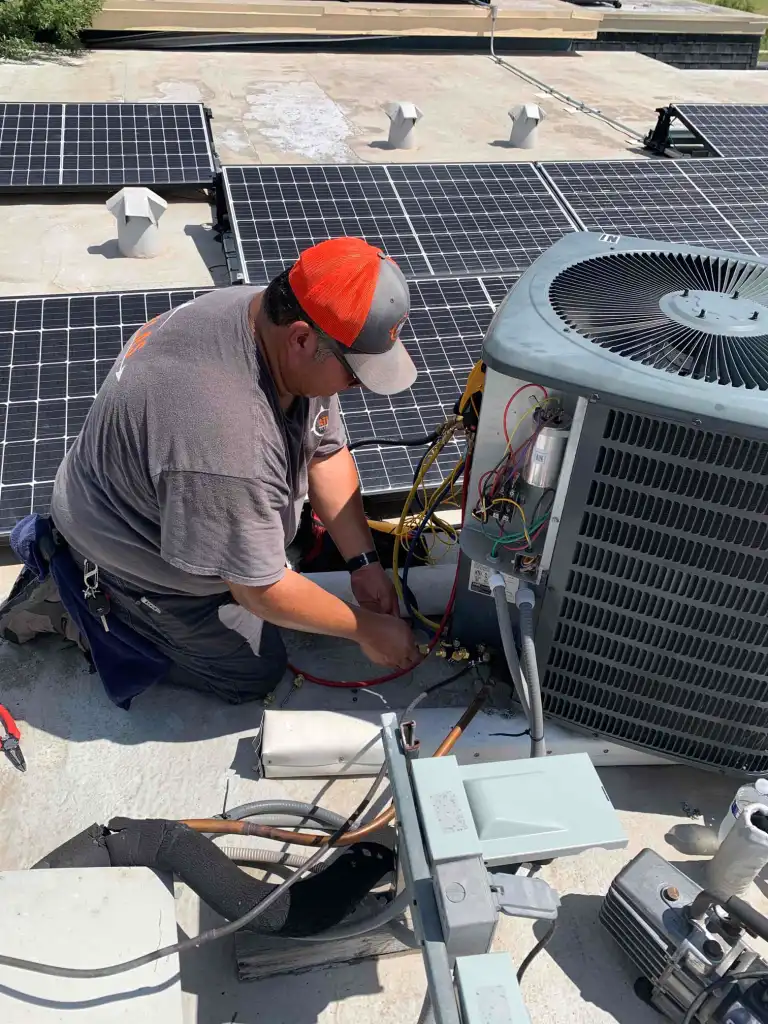
Your old vacuum pump? It’s not rated for A2Ls unless it explicitly says so. Use it and you’ve voided your warranty, your insurance, and possibly your eyebrows. Spark-resistant pumpsA2L-rated recovery machines, and A2L leak detectors are no longer optional. Manifold gauges need 1/4″ SAE left-hand thread on the small port for A2L cylinders — it’s a federal cylinder design choice to prevent cross-contamination. If you don’t own the adapter yet, you should already be on the supply house’s website.

2. Your charging procedure.

R-454B is a blend. You charge it as a liquid, not a vapor. Period. Pull vapor off the top of a blend and you’re cherry-picking the lighter component, which means the charge that goes into the system is no longer the spec on the label. The system runs wrong, the customer calls back, the company eats it. R-32 is single-component, so vapor charging is technically fine — but you should still default to liquid because the habit will save you when you switch trucks next week.

3. Your leak detection game.

A traditional electronic leak detector calibrated for 410A may not even chirp on R-32 or 454B. You need an A2L-capable detector. Bubbles still work. Nitrogen pressure tests still work. But sniffer time means upgrading. Some of the new equipment also includes a built-in Refrigerant Detection System (RDS) in the air handler — required by UL 60335-2-40, fourth edition, on most residential A2L installs. That sensor will trigger the blower and shut down the compressor if it sees a leak. Don’t disable it. Don’t bypass it. Don’t be that guy.

4. Your evacuation discipline.

500 microns or better. This wasn’t optional on 410A either, but a sloppy 800-micron pull-down “got by” on plenty of jobs. With A2Ls and the tighter design pressures, moisture and non-condensables show up as warranty failures faster. Pull deep. Hold the vacuum. Document the gauge reading. Send it to the homeowner if you have to. A2L work is an audit-trail trade now.

The transition didn’t change physics. It changed who gets to keep working in this trade.— The Mafia Desk

The Money Side No One Wants to Say Out Loud

A2L equipment is running 15% to 40% more than 410A equivalents at the wholesale level, depending on tonnage and tier. That cost gets passed to the homeowner. The homeowner who already lost his mind over a $14,000 quote in 2023 is now looking at $18,000 to $22,000 for the same nominal system. Repair vs. replace conversations are landing differently. A lot of customers are choosing to keep the old 410A unit limping along — and the data backs it up. Repair revenue share across the trade has climbed every quarter for four straight years.

Read that twice. Repair work is becoming a bigger slice of the pie. For techs who can actually diagnose — who can read a superheat chart, who can spot a TXV failure without throwing parts at it, who can hold a system on a manifold for an hour and tell you exactly what’s wrong — this is the best market in 20 years. For the parts-changers? It’s about to get rough. The customer who used to replace at the first sign of trouble is now asking real questions. If you don’t have real answers, you don’t get the work.

Certifications: The Bar Got Higher

EPA Section 608 was always required to handle refrigerant. That’s not new. What’s new is that 608 has been updated to include A2L-specific handling, and most distributors will not sell you 454B or R-32 cylinders without proof you’ve completed updated training. ESCO, ACCA, RSES, and most manufacturer programs now offer A2L-specific certs. They’re not expensive. They’re not hard. The guys who skip them are the guys who’ll be standing on the curb in 2027 wondering where the work went.

  • EPA 608 — base certification, A2L module updated. Required.
  • UL 60335-2-40 familiarity — the standard governing A2L equipment. Read it. At least skim it.
  • Manufacturer A2L training — Carrier, Trane, Daikin, Goodman, Lennox all offer factory courses. Most are free if your shop is a dealer.
  • Local code knowledge — Some AHJs are still catching up. Some require A2L permits and inspections separately. Know your jurisdiction.
// FAMILY BUSINESSEvery time a poorly-trained tech botches an A2L install and a homeowner posts about it on Nextdoor, every certified, careful, professional tech in that ZIP code pays for it. We are all on the same crew here. Police your work. Police your shop. Pull your weight.

What the Lifers Are Doing Right Now

Here’s the operating standard for techs who plan to still be working — and earning more — in 2027 and beyond:

  • A2L-rated detector, recovery machine, and vacuum pump on the truck. Not the shop. The truck.
  • Left-hand thread adapters for both R-32 and R-454B cylinders, organized, accessible, and not buried under a roll of duct tape.
  • Liquid-charge by default, every time, every refrigerant, no exceptions.
  • 500-micron evacuation, documented with a photo of the digital micron gauge.
  • Up-to-date 608 card and at least one OEM A2L cert in your binder.
  • The ability to explain GWP, A2L classification, and why this system costs more — to a homeowner — in language they understand. Without panicking them.
  • Respect for the RDS sensor in the air handler. Don’t unplug it. Don’t ignore the alarm. Don’t tell the customer it’s a “false trip.”

None of that is heroic. None of that is above-and-beyond. That’s the new baseline. That’s the floor. Anybody not at the floor is below it, and that’s where reputation goes to die.

The Mafia Take

The A2L transition isn’t the end of anything. It’s a filter. Every major shift this trade has gone through — R-22 phase-out, SEER2, communicating controls, smart thermostats, inverter compressors — every one of them sorted the techs who learn from the techs who hide. A2L is doing the same thing right now, and it’s doing it faster because the regulatory clock is real and the cylinders on the rack changed colors overnight.

The good news is the bar is right there in front of you. It’s not hidden. It’s not gatekept by an old-boys’ network. It’s training, tools, and discipline, and any tech who wants it can have it. The Mafia exists to remind you that you’re better than the version of yourself that takes shortcuts. Wear the patch. Stand for something. Show up cleaner, sharper, and more certified than the guy down the street, and the work will follow you for the rest of your career.

The 410A era was good to a lot of us. Tip your hat to it. Then close the door.

Welcome to the A2L era. Don’t be the guy left behind.


— The Mafia Desk Enforcing Excellence • Creating High Standards

Making Blue Collar Sexy Again.
HVAC Mafia // By Lifers, For Lifers
“Change Is Here — And It’s a Good Thing”

Don’t Fear the Change —Embrace the Opportunity

Change. It’s the one thing every HVAC tech eventually gets comfortable hating. You show up ready for a day of installs, repairs, and service calls — and suddenly there’s a new name on the door, someone new in the leadership seat, and a whole lot of questions swirling in your head.

When a company gets purchased by a private equity group, it can feel like your career just took a hard left turn.

“Are they going to change everything?”
“Is this about cutting costs?”
“Am I still going to have a place here?”

Let’s reset the narrative.

This isn’t a threat. This is an upgrade.

When experienced investors step into the HVAC space, they’re not betting on ductwork. They’re betting on people. They’re betting on structure. They’re betting on building something scalable, professional, and built to last.

And that directly benefits the technician.

Structure + Stability = A Real Career Path

For years, many techs have worked without things most other industries consider standard:

Paid Time Off — even during peak summer months

Health insurance that actually supports your family

A 401k program that prepares you for retirement

Newer trucks and modern equipment

Clear advancement pathways

Let’s be honest — a lot of shops historically ran lean. Tight margins. Limited benefits. Minimal long-term planning.

But when capital enters the picture, the game changes.

Now there are systems. There are processes. There are benefits packages. There are growth plans. And most importantly, there is infrastructure designed to support you for the long haul.

That kind of structure doesn’t limit you — it protects you.

Training Isn’t an Expense — It’s an Investment in You

One of the biggest advantages of a well-backed HVAC company is the commitment to keeping its technicians ahead of the curve.

This industry is changing fast:

New refrigerants.
Higher efficiency standards.
Smarter controls.
Connected systems.
Evolving code requirements.

If you’re not constantly learning, you’re falling behind.

Private equity-backed companies understand this. They invest in regular technical training, hands-on sessions, manufacturer certifications, and leadership development programs.

Why?

Because knowledgeable techs run at peak performance.
Peak performance creates efficiency.
Efficiency drives customer satisfaction.
And customer satisfaction fuels growth.

But here’s what matters most to you:

Every certification you earn…
Every new system you master…
Every advanced troubleshooting skill you develop…

Makes you more valuable.

Not just to your company — but to the market.

A well-trained technician isn’t replaceable. A well-trained technician is an asset.

The Professional Technician Era

This is the shift happening in HVAC right now.

From “just get through summer” to “build a 20-year career.”

From “hope the truck starts” to “drive equipment that reflects your professionalism.”

From “no benefits until winter” to “real PTO, real insurance, real retirement planning.”

And from “figure it out yourself” to structured development and leadership pathways.

You are no longer just turning wrenches.

You are part of a professional organization with the backing to support your growth — financially, technically, and personally.

The Bottom Line

Change can feel uncomfortable. But discomfort often signals growth.

If your company has recently been acquired, take a breath. Watch what gets built. Pay attention to the systems being put in place. Lean into the training opportunities. Ask about the benefits. Engage with the structure.

Because this is likely the most stable, supported, and growth-oriented environment you’ve ever worked in.

And if you show up ready to grow with it?

Your career just leveled up.

If you like reading this, subscribe to HVAC Mafia to receive exclusive offers and stay up to date on the latest industry news.

The industry is evolving. Make sure you evolve with it.

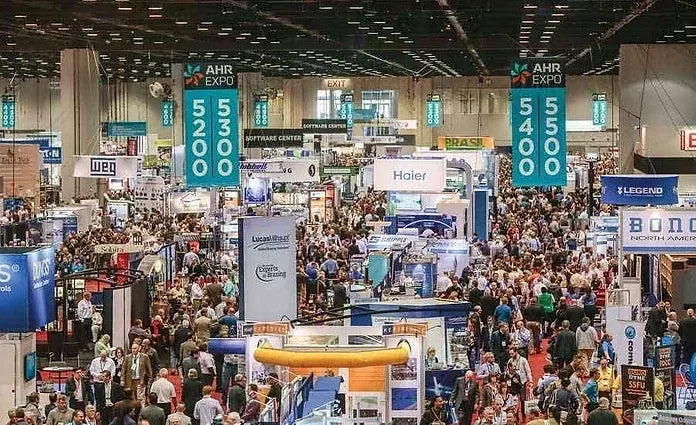
🔥 HVAC Mafia at the 2026 AHR Expo – In the Family

From February 1–4, the HVAC world came together in Las Vegas for the 2026 AHR Expo — and what an experience it was.

Thousands of contractors. Manufacturers. Distributors. Innovators. Educators.
All under one roof.

The energy was undeniable.

Walking the floor, you could feel it — this industry is evolving fast. New products. Smarter technology. AI integrations. Efficiency improvements. Sustainability pushes. But beyond the equipment and the innovation, something stood out even more:

The conversations.

Contractors openly sharing their struggles.
Owners talking about labor shortages.
Young techs looking for mentorship.
Seasoned pros asking how to future-proof their businesses.
Manufacturers listening closer than ever before.

The HVAC industry isn’t just changing — it’s hungry for connection.

The Clear Need We All Felt

At booth after booth, hallway after hallway, the same themes kept coming up:

  • “Where do I find real, honest advice?”
  • “Who’s actually looking out for contractors?”
  • “How do we grow without losing our culture?”
  • “Who can we trust?”

There’s innovation everywhere.
There’s opportunity everywhere.

But there isn’t one central place built for the people in the trade — by someone who understands the DNA of HVAC.

That’s why HVAC Mafia exists.

HVAC Mafia: More Than a Platform — It’s Family

HVAC Mafia isn’t just a brand.
It’s not just content.
It’s not just social media.

It’s a movement.

It’s about loyalty.
It’s about grit.
It’s about protecting and elevating the trade.
It’s about bringing contractors, techs, distributors, and manufacturers together under one banner:

In the Family.

We’re building a platform where:

  • Real conversations happen
  • Real problems get solved
  • Real connections are made
  • Real opportunities are created

No fluff. No ego. No gatekeeping.

Just HVAC professionals who want to win — together.

Built With You, Not For You

The biggest takeaway from AHR 2026?

The industry wants a voice.

And HVAC Mafia is listening.

This platform is being built in real time — and it will be shaped by the people who use it.

As we grow, we’re asking:

  • What content do you need?
  • What problems are you trying to solve?
  • What conversations aren’t being had?
  • What support does the next generation of HVAC professionals need

We don’t pretend to have all the answers.

But we do promise this:

We will listen.
We will adapt.
We will build based on your needs.

Because that’s what family does.

The Future of the Trade

If AHR showed us anything, it’s this:

The HVAC industry is strong.
It’s innovative.
It’s resilient.

But it needs unity.

HVAC Mafia is here to help create that unity — to protect the trade, elevate the professionals in it, and create a space where everyone from apprentices to CEOs feels like they belong.

We control the comfort.
But more importantly…

We control our future.

And we’re doing it together.

Welcome to the family.

— Randy Castricone
Founder, HVAC Mafia

Welcome to HVAC Mafia: In the Family

If you’ve spent any real time in the HVAC trade, you already know this truth:

This industry doesn’t run on corporate slogans. It runs on people.

It runs on early mornings, late nights, callbacks no one planned for, and technicians who show up anyway. It runs on knowledge passed down in trucks, supply houses, job sites, and group texts—not boardrooms.

That’s why HVAC Mafia exists.

This Isn’t a Brand. It’s a Brotherhood.

HVAC Mafia was built for the men and women who actually keep buildings running. The installers, service techs, salespeople, managers, owners, and suppliers who live this trade every day.

Not influencers pretending.
Not corporate suits selling from the outside.

This is for the people in it.

“In the Family” isn’t a slogan—it’s a standard.

It means:

  • We look out for each other
  • We share what works (and what doesn’t)
  • We don’t gatekeep knowledge
  • We respect the grind

If you’re here to learn, contribute, and support the trade—you’re family.

Why HVAC Mafia Was Created

The HVAC industry is changing fast.

Private equity, consolidation, new technology, AI, pricing pressure, and shrinking labor pools are reshaping the trade. Yet the people actually doing the work are often the last to be heard.

HVAC Mafia was created to fix that.

This platform exists to:

  • Give technicians and contractors a trusted place to connect
  • Highlight real-world experience over theory
  • Elevate quality tools, OEMs, and partners that actually earn trust
  • Protect the integrity of the trade

No pay-to-play.
No spam.
No pretending.

What You’ll Find Here

Community First

HVAC Mafia is built around conversation, shared experience, and mutual respect. Merch exists—but it’s a symbol, not the product.

Trusted Tools & Partners Only

When we back a product, OEM, or resource, it’s because it belongs in the field.

If it’s featured here, it earned its place.

Real Talk

We’ll talk about:

  • What’s actually happening in the industry
  • What techs are dealing with in the field
  • What contractors need to survive and grow
  • Where the industry is headed (and what to watch out for)

No fluff. No corporate scripts.

The Code of the Family

Every family has rules. Ours are simple:

  1. Respect the trade – This work matters
  2. Protect each other – No tearing down for clicks
  3. Share knowledge – A rising tide lifts the family
  4. Earn trust – Titles don’t matter, actions do
  5. Stay real – Always

If you live by that code, you’re welcome here.

Why the Merch Matters (And Why It’s Secondary)

HVAC Mafia gear isn’t about hype.

It’s a signal.

When you wear it, you’re saying:

  • I’m proud of this trade
  • I stand with the people in it
  • I believe in doing things the right way

The merch supports the mission—not the other way around.

What’s Next

This is just the beginning.

Coming soon:

  • Industry insights from the field
  • Technician spotlights
  • Conversations around tools, tech, and trends
  • Community-driven discussions
  • Limited drops and collaborations

HVAC Mafia will grow the same way the trade always has—through people, not polish.

Final Word

If you’ve ever felt like the industry forgot who actually does the work—you’re not alone.

HVAC Mafia is here to bring it back to the people who built it.

Welcome to the family.

— HVAC Mafia