
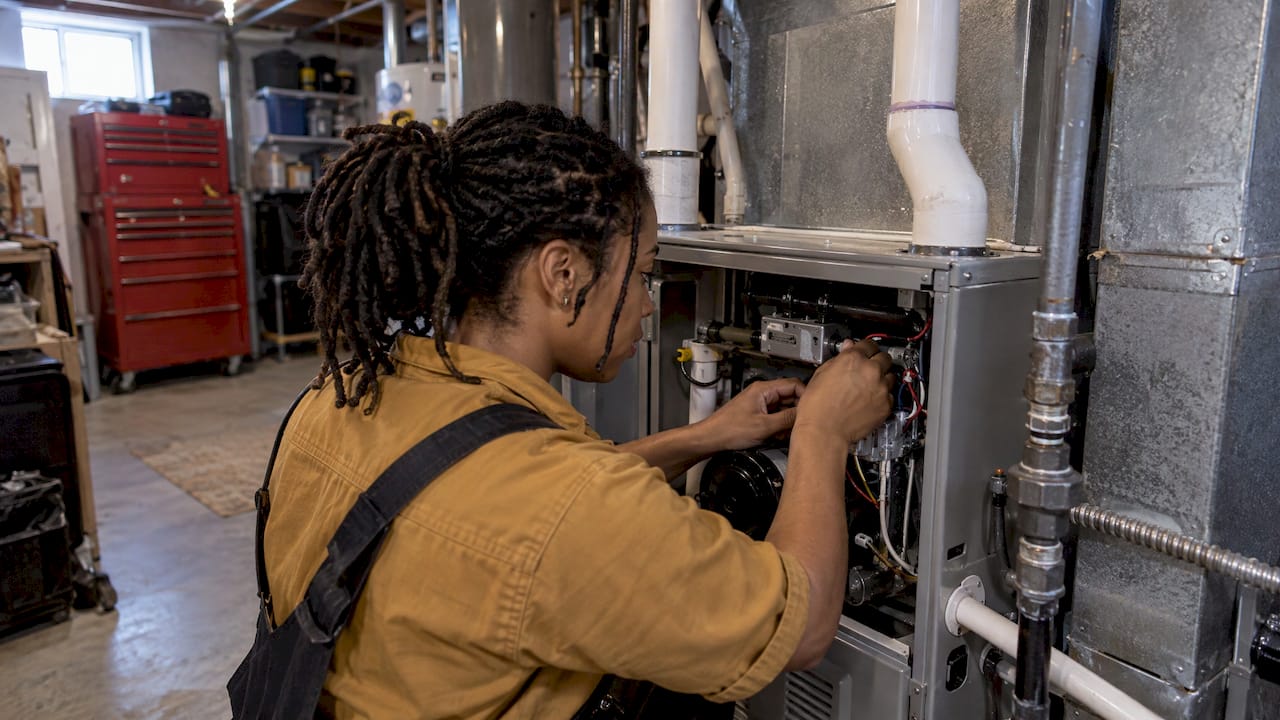
Yes, HVAC is a good career for people who like hands-on work, want to get paid while they learn and are willing to put up with some hard days in attics and on rooftops. The government numbers back it up: solid median pay, faster-than-average job growth and an entry path that does not require a four-year degree. But “good” depends on the shop you land in as much as the trade itself. Here is the full picture, from a community that has been around this trade for a long time.
TL;DR
- The median HVAC pay in the U.S. was $61,010 a year in May 2025, with the top 10% earning more than $95,210.
- BLS projects 11% job growth from 2025 to 2035, much faster than average, with about 40,600 openings a year.
- You can start through a trade school program or a paid apprenticeship. Nearly everyone who handles refrigerant needs EPA certification.
- The work is physical, and the schedule can include nights, weekends and on-call hours. Pay and culture vary a lot from one contractor to the next.
- Picking a good employer matters as much as picking the trade.
Table of Contents
- What HVAC techs actually do all day
- How much does HVAC pay?
- Job outlook: will there be work?
- The hard parts, said plainly
- How to get started
- Who HVAC is a good fit for
- Where the trade is headed
- Our take
- Ready to look for HVAC work?
- FAQ
- Sources
What HVAC techs actually do all day
HVAC stands for heating, ventilation and air conditioning, and the trade usually includes refrigeration. According to the Bureau of Labor Statistics, technicians install, maintain and repair these systems. They also install electrical components and wiring, inspect and test equipment, talk with customers about what is going wrong, replace worn parts and keep records of the work.
That sounds tidy. In real life it means a service tech might spend the morning diagnosing a no-cool call in a hot attic, the afternoon doing a tune-up and an hour with a homeowner explaining why their 18-year-old system is not worth another repair.
The trade also splits into lanes:
- Service and repair: diagnosing problems, running calls, building customer relationships.
- Installation: swapping systems, running lines and ductwork, working with a crew.
- Commercial and refrigeration: rooftop units, chillers, grocery store and restaurant refrigeration.
- Specialties: BLS notes some techs focus on areas such as radiant heating, testing and balancing, or commercial refrigeration.
Residential techs often also sell maintenance agreements. Those typically cover inspecting the system, replacing filters and checking refrigerant levels, according to the same BLS profile. If you like talking to people, that lane can pay well. If you would rather turn wrenches, installation or commercial work may suit you better.
How much does HVAC pay?
The national picture from BLS data for May 2025:
| Measure | Amount |
|---|---|
| Median annual wage | $61,010 |
| Median hourly wage | $29.33 |
| Lowest 10% earn less than | $40,050 |
| Highest 10% earn more than | $95,210 |
That spread tells you something. A first-year helper and a ten-year lead tech are not in the same pay world. BLS says earnings vary with experience, responsibility, performance, tenure and where you live.
Location changes the math
State figures show how much geography matters. New York’s clean energy career guide lists HVAC installer wages from $47,510 to $98,530, with a median of $32.05 an hour, and service managers from $51,380 to $136,820. Meanwhile, Oklahoma’s career site reports a median hourly wage of $20.34 for technicians there. Cost of living moves along with those numbers, so compare take-home against local rent and gas, not just the headline.
Pay grows with the title
Most techs do not stay at the bottom of the range. A typical path looks like this:
- Helper or apprentice, learning basic tasks under an experienced tech.
- Service or install tech, running your own calls.
- Senior tech or install lead, mentoring and handling the tough jobs.
- Service manager, operations manager or business owner.
BLS says new hires usually work alongside experienced technicians, starting with basics like insulating refrigerant lines or cleaning furnaces, then moving to cutting and soldering pipe and checking electrical circuits. Oklahoma’s career site also points to management roles and to becoming a contractor or starting your own business as ways to advance.
Want to know what the extras look like? Pay is only part of the package. We put together a guide on HVAC employee benefits techs should expect, because a good benefits package can be worth thousands a year.
Job outlook: will there be work?
BLS projects employment growth of 11% from 2025 to 2035, much faster than the average for all occupations. That adds about 48,200 jobs to a base of 440,900, with roughly 40,600 openings projected each year once you count people leaving or retiring.
Numbers like that explain why contractors keep saying they cannot find enough techs. Every building with a furnace, a heat pump, an air conditioner or a walk-in cooler needs somebody to keep it running, and that work happens on-site. You cannot do a compressor swap over the internet.
How HVAC compares with other trades
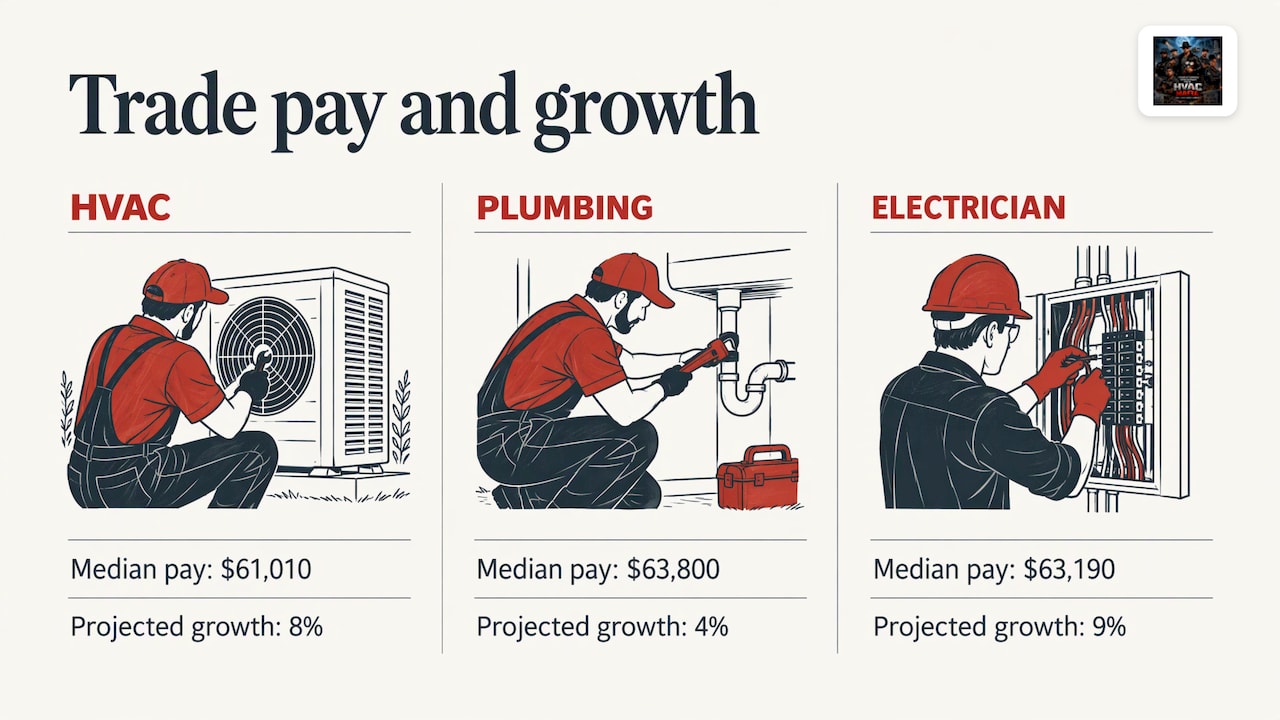
A 2024 to 2034 benchmark from JobStack Research lines up several trades on BLS figures. HVAC shows $61,010 median pay and 8% projected growth. Plumbers are listed at $63,800 and 4%, electricians at $63,190 and 9%. In other words, HVAC pay is in the same neighborhood as its sister trades, with strong demand.
Here is the thing nobody tells new people: you can cross-train. Plenty of techs add electrical or plumbing knowledge over time, and that makes you more valuable to a shop.
The hard parts, said plainly
We would not be doing you any favors if we left this out. HVAC is not easy.
It is physical. BLS says HVAC technicians have one of the highest rates of injuries and illnesses of all occupations. Hazards include burns from electrical parts or chemicals and strains or sprains from heavy equipment. Refrigerants are hazardous, so the right safety gear is part of the job. Techs lower their risk with proper lifting technique and protective equipment such as special clothing, goggles or masks.
The schedule can be rough. Most techs work full time, per BLS, but evenings and weekends come up, and some are on call for emergencies. Peak heating and cooling seasons can mean overtime and irregular hours.
Weather is the job. Hot attics in July, cold roofs in January. Some people love being out of an office. Others burn out.
Employers differ. One shop gives you training, a clean truck and a fair on-call rotation. Another hands you a ladder and a quota. Same trade, very different life.
So is being in HVAC hard? Yes, physically and mentally, since you diagnose problems that do not announce themselves. But most techs will tell you the difficulty is part of why the skill pays.
How to get started
Training options
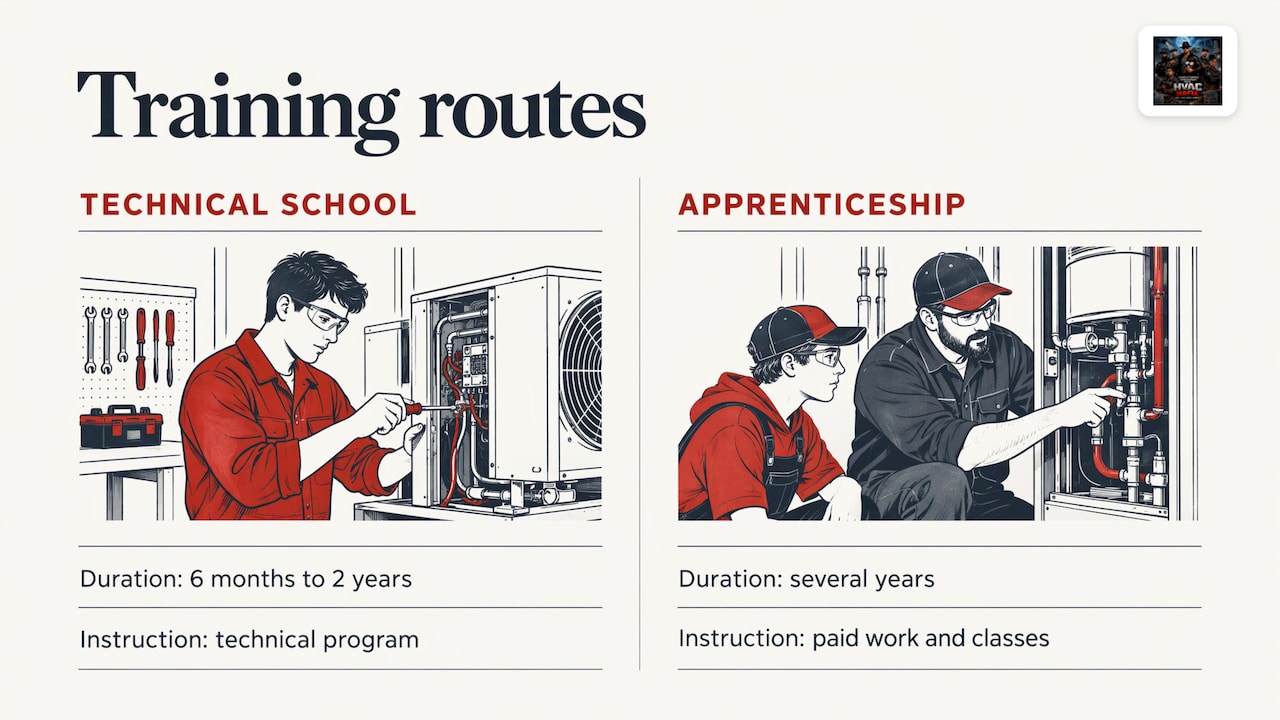
According to BLS, techs typically get postsecondary instruction from technical schools or community colleges, with programs lasting from 6 months to 2 years and ending in a certificate or an associate degree. Some employers will consider high school graduates. Apprenticeships usually run several years and combine paid on-the-job training with technical instruction. That earn-while-you-learn route is a big reason many people pick the trade over a four-year degree.
If you are wondering about timing, our guide on how long it takes to get HVAC certified breaks it down.
Certifications and licenses
BLS says the EPA requires nearly all HVAC technicians to be certified in proper refrigerant handling. Many other industry certifications are optional, though some employers prefer or require particular ones. State licensing rules differ, so check your own state’s licensing board before you start applying.
Your first job
Your first employer shapes your habits for years. When you are starting out, ask:
- Will someone senior ride with me and actually teach?
- Is there a clear path from helper to tech to lead?
- How is pay structured, hourly, flat rate or commission?
- What does the on-call rotation look like?
- What benefits come with the job?
A clean, specific resume helps too. Here is how to write an HVAC technician resume that gets callbacks even with limited experience.
Who HVAC is a good fit for
HVAC tends to work well if you:
- Would rather learn on the job than sit in a lecture hall for four years.
- Like solving problems with your hands and your head.
- Are comfortable talking with customers.
- Want a skill that is in demand in nearly every town.
- Are interested in running a team or your own shop down the road.
It may be a tougher fit if you need a predictable desk schedule or cannot handle heat, tight spaces and heights.
Where the trade is headed
Systems are getting more complex. Efficiency standards, refrigerant changes and electrification mean techs need to keep learning. Investment research from BlackRock notes that skilled trades like HVAC are largely resistant to offshoring and AI replacement, and that apprenticeships let people earn and learn at the same time. The work is hands-on and varies from one building to the next, so a laptop will not replace the person on the roof.
Our take
We have watched this trade for a long time, and our founder is a 36-year HVAC veteran and former dealership owner. Here is what he and the rest of us keep seeing.
HVAC is a good career. It can be a great one if you land with the right contractor. The techs who stay and grow are the ones who found a shop that pays fairly, trains them and treats them with respect. The ones who leave usually do not leave the trade. They leave a bad employer.
That is why we built HVAC Mafia. Techs register free and see openings from real contractors, with straight talk on pay, certifications and how to spot good and bad employers. Contractors get a trade-only audience of nearly 100,000 HVAC followers. No outsiders, no homeowner noise, no corporate fluff.
Build a career, not just another paycheck. That is the goal.
the author
Ready to look for HVAC work?
If you are a tech, apprentice or trade school student, membership on HVAC Mafia is free. Register as a member to see openings from real contractors, which are hidden from non-members, and join the Tech Talk forums and the HVAC Underground Podcast.

Contractors who are struggling to hire can reach a trade-only audience through our job posting plans. Plans are listed at $199 per month per position for Standard and $149 per month per position for Annual, with Enterprise starting from $99 per month per position. You can also see what real listings look like, such as an HVAC service technician role in Spring, TX or an install lead position in Sharonville, OH.
FAQ
What do HVAC technicians do?
They install, maintain and repair heating, cooling and refrigeration systems. Day to day that includes testing equipment, replacing worn parts, working on electrical components and explaining problems to customers. Some focus on installs, others on service or commercial refrigeration.
How much do HVAC technicians earn?
BLS reports a median of $61,010 a year in May 2025. The lowest 10% earned under $40,050 and the highest 10% earned more than $95,210. Experience, specialty and location move you around that range.
Is being in HVAC hard?
It can be. The work is physical, the weather is part of the job and schedules can include nights, weekends and on-call time. It is also skilled work, and many techs find that learning to diagnose tough problems is what makes the career rewarding and well paid.
Do I need a degree to start?
Not a four-year one. BLS says techs typically complete a technical school or community college program lasting 6 months to 2 years, or learn through a multi-year paid apprenticeship. Nearly all techs also need EPA refrigerant handling certification.
Sources
- BLS Occupational Outlook Handbook: HVAC mechanics and installers
- BLS Occupational Outlook Handbook: HVAC mechanics and installers, print version
- NYSERDA: HVAC installer career guide
- Oklahoma Department of Career Choices: HVAC technician
- JobStack Research: skilled trades wage and job outlook benchmarks
- BlackRock: investing in infrastructure and workforce